What Makes High School of the Dead Manga Panels Distinctive
The thing that sets HOTD apart visually is a tension that runs through every page: this is technically accomplished horror art fused with extreme fan service, and somehow both elements are executed at an equally high level.
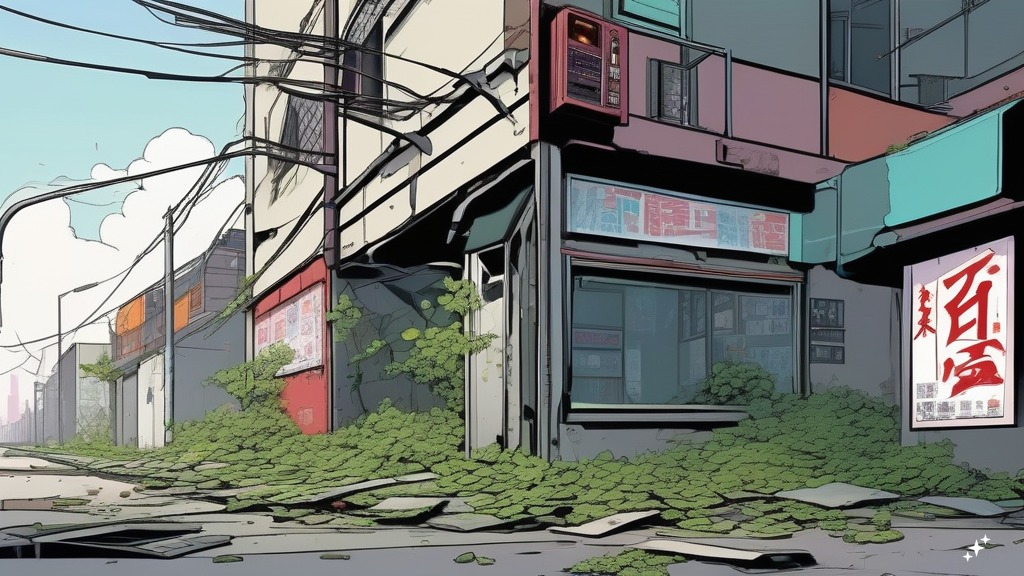
Shoji Sato can render decomposing zombie flesh with unflinching anatomical detail in one panel, then pivot to exaggerated character proportions drawn with the same precision in the next. The backgrounds are architectural — realistic urban Japan collapsing into ruins after civilization has started to fall apart. The firearms are drawn with reference-level accuracy. The zombie designs are genuinely unsettling. And then there’s a double-page spread that’s… well, unmistakably HOTD.
This combination is polarizing, and that’s fair. But from a pure art standpoint, Shoji Sato’s drawing skill is remarkable. The manga panels reward close attention in ways the anime can’t replicate — when you’re looking at a static page, you linger on details. You notice the crumbling concrete in the background. You see every individual zombie in a crowd scene. The horror has time to settle in.
If you came from the anime, the manga panels are worth experiencing for the art alone. The anime only adapted about half the manga, and there’s an entire second half of the series with increasingly detailed artwork that has never been animated.
The Most Iconic High School of the Dead Manga Panels
The Bullet-Time Physics Scene (Chapter 16, Volume 4)
This is probably the single most famous panel sequence in the entire series, and it perfectly captures everything HOTD is about.
During a firefight, Shoji Sato illustrates the shockwave physics of bullets passing between characters by using breast jiggle as a visual indicator of the shockwave. It’s technically impressive art used for absurd fan service. The bullet trajectories are drawn with precision. The anatomy is rendered with meticulous attention. And the entire sequence is completely ridiculous.
This is the panel spread that launched a thousand internet discussions — and it’s genuinely celebrated in the HOTD fanbase, not just notorious. The scene has become iconic because it’s technically accomplished artwork in service of something genuinely silly, and that tension is HOTD’s entire identity distilled into a few pages.
The Initial Outbreak at Fujimi High School (Chapters 1–2, Volume 1)
The opening chapters contain some of the most effective zombie outbreak panels in manga. The setting is Fujimi High School — the ordinary high school where the main characters are students when the apocalypse begins — and Shoji Sato uses the mundane environment to maximum horror effect.
The school hallway scenes are claustrophobic. Panel layouts (the arrangement and sizing of frames on the page) tighten as the situation escalates. Panicked students fill corridors. Shambling zombies appear where they shouldn’t be. What makes these panels hit so hard is the contrast — one page shows normal school life, the next shows sudden, graphic gore. That whiplash is deliberate, and it works.
These opening chapters establish the horror tone immediately, before the fan service ramps up in later volumes. If you want to see Shoji Sato’s horror skills at their purest, Volume 1’s outbreak sequence is where to look.
Saeko’s Sword Fight — Combat Art at Its Most Polarizing (Chapter 14, Volume 4)
This is the most divisive sequence in the series. Saeko Busujima — a skilled swordswoman and one of the group’s strongest fighters — battles a group of zombies wearing essentially nothing, and the panels alternate between genuinely dynamic sword combat choreography and shameless fan service.
Here’s the thing — the action choreography in this sequence is legitimately impressive. Saeko’s combat poses are fluid and anatomically grounded. The sequence of panels guides your eye through each strike in a natural reading flow. Shoji Sato understands how bodies move in combat, and it shows. The fan service is extreme, but it’s layered on top of real action illustration skill.
Whether this sequence works for you is going to depend entirely on your tolerance for HOTD’s central contradiction. But from a pure illustration standpoint, the movement and dynamism in these panels are some of the best in the series.
The Bridge Escape Sequence (Chapters 8–9, Volume 2)
This sequence is where Shoji Sato’s sense of scale really shines. The group is escaping across a bridge swarming with zombies, and Sato uses cinematic double-page spreads to convey the enormity of the horde.
Wide establishing shots show hundreds of detailed undead filling the bridge from end to end. Then the panels cut to tight close-ups of individual characters fighting through the crowd. The contrast between macro and micro — the overwhelming zombie mass versus the desperate individuals — creates a sense of tension that rivals anything in the anime adaptation.
These panels are also some of the best examples of Shoji Sato’s environmental detail. The bridge structure, the vehicles, the distant cityscape — everything is rendered with precision that grounds the horror in a recognizable real-world setting.
Takashi’s Motorcycle Ride and Promise to Rei (Chapter 11, Volume 3)
Not every great panel in HOTD is action or horror. Some of the series’ most striking visual moments are the quiet ones. Takashi — the main protagonist — rides his motorcycle through empty streets, sharing intimate conversations with Rei, another survivor, neither of them knowing if they’ll survive the night.
These panels show Shoji Sato can handle subtlety alongside spectacle. The pacing slows down. Panel borders open up. Empty space on the page creates emotional breathing room. It’s a reminder that underneath all the zombie carnage and fan service, there’s an actual story about teenagers trying to survive and protect each other.
These quieter moments make the action and horror panels hit harder by contrast. They earn the spectacle.
Shoji Sato’s Art Style — What to Look For
If you’re picking up the manga specifically to appreciate the art, here’s what to pay attention to:
- Hyper-detailed backgrounds — Realistic urban Japan rendered with architectural precision. Environments that feel lived-in and geographically consistent as civilization crumbles around the characters. Shoji Sato doesn’t cut corners on backgrounds the way many manga artists do.
- Zombie design — Decomposing flesh, exposed bones, and anatomical detail that heightens the horror. Each zombie has individual characteristics — different stages of decay, different injuries, different clothing. They’re not copy-pasted.
- Dynamic action panels — Dramatic camera angles that borrow heavily from cinematic composition. Frequent double-page spreads. Lines suggesting motion and impact effects (drawn marks that visually convey movement and force in a still image) create genuine momentum on a static page.
- Fan service rendering — Exaggerated character proportions drawn with the same technical precision as the horror elements. Whatever your opinion on the content, the drawing quality is consistent across every element of the art.
- Military hardware — Guns, vehicles, and tactical equipment drawn with reference-level accuracy. The character Kohta Hirano (a gun-obsessed student and one of the main group members) carries weapons that are identifiable and mechanically correct down to small details. If you know firearms, you’ll notice the attention to detail.
- Visual contrast technique — This is the big one. Beautiful character designs placed directly against grotesque undead. Clean, attractive figure drawing juxtaposed with visceral gore. This tension between beauty and horror is the series’ core visual identity. Shoji Sato doesn’t separate these elements — he puts them in the same panel, sometimes the same composition, and lets the contrast do the work.
Horror Panels — The Manga’s Scariest Moments
HOTD gets talked about a lot for its fan service, but the horror artwork deserves just as much attention. Here are the sequences where Shoji Sato’s horror illustration is at its strongest:
- The initial outbreak (Volume 1) — The shift from mundane school life to carnage happens fast, and the panel-to-panel transition from normalcy to horror is genuinely unsettling. Students you saw chatting in hallways are suddenly torn apart. The speed of the collapse is the horror.
- Mass zombie crowd scenes — Shoji Sato’s ability to render dozens of individually detailed undead in a single panel is impressive. These aren’t vague silhouettes in the background — each zombie has distinct features, wounds, and decomposition. The sheer density of these crowd panels creates a suffocating sense of being overwhelmed.
- Close-up gore panels — Head crushings, dismemberments, and bite wounds drawn with anatomical specificity. Shoji Sato doesn’t shy away from the mechanics of physical destruction, and the detail forces you to confront the violence rather than gloss over it.
- The shrine encounter and night sequences (Volumes 5–6) — The later volumes push into darker atmospheric territory. Night scenes with limited visibility, encounters in confined spaces, and a growing sense of psychological horror alongside the physical. These manga-only sequences (never adapted into anime) show Sato evolving as a horror artist.
- Why the manga’s horror hits harder than the anime — In animation, a horrifying image flashes by in a fraction of a second. In manga, a panel sits there on the page. You look at it for as long as you want — or as long as it takes to process. Static images of violence force the reader to linger in a way that animated sequences don’t. That lingering is where the horror lives.
Manga Panels vs. Anime — Key Differences
The HOTD anime (12 episodes, produced by Madhouse — a well-known Japanese animation studio — aired in 2010) is a faithful adaptation, but it only covers roughly Chapters 1 through 16, which corresponds to Volumes 1 through 4. That’s barely more than half the manga.
Here’s what that means in practical terms:
| Aspect | Anime | Manga |
|---|---|---|
| Content covered | Chapters 1–16 (Volumes 1–4) | Chapters 1–30 (Volumes 1–7) |
| Episodes / Volumes | 12 episodes | 7 volumes |
| Manga-only content | None | Volumes 5–7 (Chapters 18–30) entirely exclusive |
| Art format | Animated, colored, moving | Static panels, black and white (or full color edition) |
| Fan service handling | Some scenes are toned down — for example, the bullet-time physics scene is slightly less exaggerated in the anime | Uncensored as originally drawn |
| Composition | Standard TV-ratio framing | Double-page spreads and varied panel layouts unique to the page format |
If you’ve only watched the anime, you’ve missed nearly half the manga. Volumes 5 through 7 contain story content and artwork that has never been adapted in any other format. The art in these later volumes is also arguably Sato’s strongest work in the series — he became more detailed and ambitious as the series progressed.
There’s also a fundamental difference in how the art lands. Shoji Sato’s double-page spreads are composed specifically for the manga page format. When these compositions are translated to animation, the panel layout — which is part of the art — is lost. A double-page spread that your eyes travel across in a specific visual path becomes a few seconds of screen time with a different composition entirely.
Both versions have strengths. The anime has color, sound, and fluid animation quality. The manga has Sato’s original compositions, the ability to linger on detail, and an entire second half of the story.
Which Volumes Have the Best Panels
If you’re picking up the manga specifically for the art, here’s a volume-by-volume breakdown of what to expect:
Volume 1 (Chapters 1–5): The Outbreak
The essential starting point. The Fujimi High School outbreak sequence is some of the strongest horror artwork in the series. The contrast between school life normalcy and sudden zombie apocalypse gives these panels their power. This volume establishes the visual tone for everything that follows.
Best for: Horror panels, outbreak sequences, the most effective tonal shifts in the series.
Volume 2 (Chapters 6–9): The Bridge Escape
Home to the bridge escape sequence and early action set pieces. This is where Shoji Sato’s sense of scale first becomes apparent — the wide shots of zombie hordes against urban environments are stunning. The action choreography begins to hit its stride here.
Best for: Large-scale action, environmental art, cinematic double-page spreads.
Volume 3 (Chapters 10–13): Quiet Moments and Character Building
Volume 3 is lower on spectacle than the volumes surrounding it, focusing more on character dynamics and quieter sequences like the motorcycle ride. The art remains strong, and this volume provides the emotional foundation that makes the action in Volume 4 land harder. If you’re reading for panel art alone, this volume is less of a highlight — but it’s essential context.
Best for: Character-focused panels, emotional pacing, Sato’s subtler artwork.
Volume 4 (Chapters 14–17): The Iconic Panels
This is the volume. The bullet-time physics scene and Saeko’s sword fight are both here. If you want to see the panels that defined HOTD’s visual identity and launched a million internet debates, Volume 4 is where they live.
Best for: The most iconic and recognizable panels in the series. Peak HOTD for better or worse.
Volumes 5–7 (Chapters 18–30): Manga-Only Content
These volumes have no anime adaptation. If you’ve only watched the anime, everything here is new. The art becomes increasingly detailed as the series progresses, with darker atmospheric horror, more complex action sequences, and some of Sato’s most ambitious page compositions.
Best for: Exclusive content, Sato’s most mature artwork, darker horror tone.
A Note on the Full Color Edition
Yen Press released a Full Color Edition of the manga. (“Yen Press” is the English-language publisher that licensed HOTD for release outside Japan.) The color edition is available as 7 individual color volumes or as 2 Color Omnibus editions. An omnibus is a single book that collects multiple volumes into one — so instead of buying several separate books, you get them bundled together.
Color Omnibus Vol. 1 covers Volumes 1–4 (including the bullet-time physics scene and Saeko’s sword fight). Color Omnibus Vol. 2 covers Volumes 5–7 (the manga-only content never adapted into anime).
If you’re picking up HOTD specifically for the visual experience, the color editions transform the panels. Sato’s detailed art gains additional depth with color, and the horror elements become significantly more visceral when blood is actually red instead of the grey dot-pattern shading (called “screentone”) used in standard black and white manga printing.
The standard black and white editions are the classic experience, but the color editions are worth considering if panel art is your primary reason for reading.
The Incomplete Ending
Writer Daisuke Sato passed away in March 2017. Illustrator Shoji Sato confirmed the series will not continue. The manga ends at Volume 7, Chapter 30, without a conclusion to the story. For readers picking up HOTD specifically for the artwork and panel composition, the lack of a narrative ending matters less — the visual quality is consistent throughout. For readers who want story closure, it’s something to factor in.
Highschool of the Dead Color Omnibus Vol.2
Highschool of the Dead Color Omnibus Vol.1
Highschool of the Dead Vol.1
Where to Read These Panels Legally
Highschool of the Dead is published in English by Yen Press. Here are your options:
Standard Black and White Edition
The original 7-volume release. This is the classic format — standard manga sizing with the original black and white artwork. It’s the most affordable way to read the complete series.
Full Color Edition
Available as 7 individual color volumes or as the 2 Color Omnibus editions described above. The Color Omnibus editions are a great value if you want the full color experience without buying 7 separate books.
Digital Availability
The series is available digitally through major manga platforms. Digital is a solid option for HOTD specifically because you can zoom into panel details — and there are a lot of details worth zooming into in Shoji Sato’s artwork.
Print Status
HOTD volumes go in and out of print periodically. If you find physical copies at a reasonable price, it’s worth grabbing them. The Color Omnibus editions in particular can fluctuate in availability.
Final Thoughts
Highschool of the Dead is one of those manga that people have strong opinions about, and that’s fair. The fan service is extreme and it’s not for everyone. But Shoji Sato’s artwork — the horror illustration, the action choreography, the environmental detail, the sheer technical skill on display — deserves recognition regardless of how you feel about the content.
The High School of the Dead manga panels reward attention in ways the anime can’t replicate. If you’re curious about the source material after watching the anime, if you’ve seen clips and screenshots online and want to know what the fuss is about, or if you just want to see some genuinely impressive manga illustration that happens to involve zombies and everything else HOTD is known for, grab Volume 1 and see for yourself.
Just know going in: 7 volumes, no ending, and one of the most distinctive art styles in zombie manga. That’s what you’re signing up for. And honestly? The art alone makes it worth the ride.