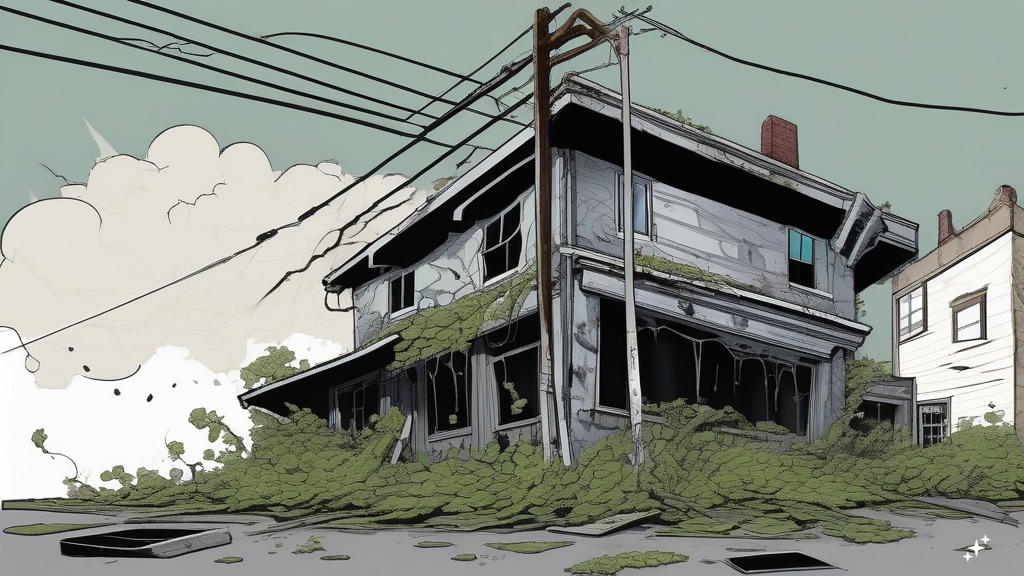
I Am a Hero Manga Characters: Quick Reference
Here’s a fast-scan table of the major players. Some of the terms in this table (like “ZQN”) are explained in detail further down — so if anything here is unfamiliar, just keep scrolling.
| Character | Background | Role in the Story |
|---|---|---|
| Hideo Suzuki | 35-year-old manga assistant | Protagonist; one of few armed civilians in Japan |
| Hiromi Hayakari | High school student | Infected survivor with superhuman abilities; emotional core |
| Yabu (Tsugumi Oda) | Former nurse (female) | Pragmatic early ally with medical knowledge |
| Kurusu | Self-appointed leader | Authoritarian ruler of the outlet mall survivors |
| Tetsuko | Hideo’s girlfriend | Her transformation is the event that sets the whole story in motion |
| Korori | Child survivor | Adds vulnerability and emotional stakes |
| Mitani | Outlet mall community member | Initially timid; shows how ordinary people adapt |
| Sango Araki | Antagonist | Puppet-leader at the outlet mall, punishes those with former authority |
Now let’s dig into each one.
Hideo Suzuki — The Unlikely Protagonist
Hideo Suzuki is not your typical manga hero. He’s not brave. He’s not strong. He’s not even particularly likable at first. And that’s exactly the point.
At 35 years old, Hideo works as a manga assistant — someone who helps a lead manga creator (called a mangaka in Japanese) with backgrounds, inking, and other production tasks. His boss is a mangaka named Nakata. Hideo’s own dream of becoming a successful manga creator hasn’t panned out. His career is going nowhere. His relationship with his girlfriend Tetsuko is strained. He’s the kind of guy who swallows every frustration and smiles through it — a doormat in the truest sense.
But here’s what makes Hideo one of the most fascinating zombie-fiction protagonists out there: he experiences hallucinations and delusional episodes even before the outbreak begins. Hanazawa seeds the early volumes with moments where Hideo sees and hears things that aren’t there, and as a reader, you’re never quite sure what’s real and what isn’t. This creates a layer of psychological horror that sits underneath the entire series. When zombies do start appearing, you’re asking yourself the same question Hideo is — is this actually happening?
The other crucial detail: Hideo legally owns a shotgun for competitive skeet shooting. Japan has some of the strictest civilian firearm laws in the world — private gun ownership is vanishingly rare and requires extensive licensing. This makes Hideo one of an extremely small number of people who are armed when everything falls apart. The shotgun becomes the most important object in the series — not just as a weapon, but as a symbol. Everyone wants it. Everyone has opinions about who should carry it. It defines how other survivors see Hideo and how he sees himself.
Hideo’s character arc — meaning the way he changes and grows across the story — is the slow, painful journey from passive, anxiety-ridden bystander to someone who can actually take action. The title of the manga — I Am a Hero — is essentially the statement he’s trying to earn the right to say. It’s not a given. It’s a question the entire series is built around: can this deeply ordinary, deeply flawed man become a hero?
Why Hideo works so well: His unreliable perception means you experience his paranoia and confusion firsthand. You don’t just watch the horror — you feel it through his eyes. And because Hanazawa spends those early, deliberately paced volumes establishing exactly who Hideo is before everything goes wrong, the stakes feel enormous once the outbreak hits. You know this man. You know his weaknesses. And you’re terrified for him.
Hiromi Hayakari — The Half-ZQN
If Hideo is the brain of the story, Hiromi Hayakari is its heart.
Hiromi is a high school student who gets bitten early in the outbreak. In most zombie stories, that’s a death sentence — or worse, a transformation into a mindless monster. But Hiromi doesn’t fully turn. Instead, she becomes what the series calls a half-ZQN: she retains her consciousness, her personality, and her ability to think and communicate, but she also develops superhuman physical abilities. (ZQN is the series’ name for its infected — we’ll break down what that means in a dedicated section below.)
This makes her one of the most compelling characters in the series for several reasons:
- She’s the emotional core. Hiromi gives Hideo someone to protect, someone to fight for. Their relationship isn’t romantic — it’s more like a protective, family-like bond between two people who had no one else. Hideo, who has failed at almost everything in his life, finally has someone who depends on him. And Hiromi, a teenager thrown into a nightmare, has someone who won’t abandon her despite what she’s becoming.
- She raises the central question of the story. If someone is infected but still conscious, still feeling, still them — are they still human? Other survivors don’t always think so. Hiromi’s existence forces every character (and every reader) to confront what “human” actually means when the rules have changed.
- She’s powerful but vulnerable. Her half-ZQN abilities make her physically formidable, but she’s still a scared teenager. The gap between what she can do and how she feels creates constant tension.
Hiromi’s presence transforms the story from a straightforward survival narrative into something much more emotionally complex. She’s the reason I Am a Hero lingers in your mind long after you put it down.
Yabu — The Pragmatic Survivor
Yabu (full name Tsugumi Oda) is a former nurse and one of the first allies Hideo encounters. Her medical knowledge makes her immediately, practically valuable to any survivor group — a rare commodity in a world where a minor wound can turn fatal.
But Yabu’s defining trait isn’t her medical skill. It’s her pragmatism. Yabu is willing to make cold, calculating decisions for the sake of survival. Where Hideo hesitates, agonizes, and freezes up, Yabu assesses the situation and acts. This makes her an effective survivor, but it also puts her in moral territory that’s uncomfortable to watch.
The dynamic between Yabu and Hideo is one of the story’s best tensions. Hideo’s paralysis frustrates Yabu. Yabu’s willingness to cross moral lines disturbs Hideo. Neither approach is presented as entirely right or entirely wrong — Hanazawa lets the reader sit with the discomfort of both.
Yabu is also a great example of how I Am a Hero handles its supporting cast. She’s not just “the medic.” She’s a fully realized person with her own fears, blind spots, and survival instincts. Her presence makes every group decision more complicated, because you can never be sure whether her pragmatism will save everyone or cost someone their humanity.
Kurusu — The Outlet Mall Tyrant
If the ZQN represent the external horror of I Am a Hero, Kurusu represents the internal one. He’s the self-appointed leader of the large survivor community that forms inside an outlet mall, and he is one of the most unsettling antagonists in the series — despite being entirely human.
Kurusu uses the chaos of the outbreak to seize authoritarian control over the mall survivors. He establishes a strict hierarchy, enforces rules through intimidation, and positions himself as indispensable. It happens fast, and it happens in a way that feels horrifyingly plausible. When the old social order collapses, someone always steps into the vacuum. Kurusu is that someone.
What makes Kurusu so effective as an antagonist:
- He’s not a cartoon villain. He genuinely believes (or at least convincingly argues) that his control is necessary for the group’s survival. Some of his decisions are defensible. That’s what makes him dangerous.
- He creates tension that rivals the ZQN threat. When Hideo’s group encounters the outlet mall community, the human politics become just as threatening as the infected outside. Kurusu’s rules about who gets resources, who has authority, and who gets to stay create life-or-death stakes without a single zombie in the room.
- He forces Hideo to confront his passivity. Hideo’s default mode is to go along, to avoid conflict, to keep his head down. Kurusu’s authoritarian structure exploits exactly that kind of compliance. For Hideo to become the “hero” the title promises, he has to find a way to push back — and that’s incredibly hard for someone wired like Hideo.
Kurusu is a reminder that in the best zombie fiction, the living are always more dangerous than the dead.
Tetsuko — The Girlfriend Who Turned
Tetsuko is Hideo’s live-in girlfriend when the series opens. Their relationship is strained — she’s frustrated with his lack of ambition and his inability to communicate honestly. It’s a recognizable, uncomfortable portrait of a relationship that’s slowly dying before anyone turns into a zombie.
Then she turns into a zombie.
Tetsuko’s transformation into a ZQN in the opening volumes is the event that sets the entire series in motion. It’s the moment that forces Hideo to flee Tokyo, to confront reality, to start surviving. And it’s one of the most disturbing sequences in the manga — unsettling not just because of the graphic physical transformation (a type of horror focused on the human body being twisted into something unrecognizable), but because of the emotional weight behind it. This is someone Hideo lived with, slept next to, argued with about dishes. Watching her become something inhuman is devastating precisely because she was so human just pages earlier.
On a symbolic level, Tetsuko’s transformation represents the death of Hideo’s old life. His apartment, his routine, his comfortable mediocrity — none of it can be returned to. She is the door slamming shut behind him. There’s no going back. There’s only forward, into a world that doesn’t care how unprepared he is.
Tetsuko doesn’t have a lot of page time compared to the rest of the cast, but her impact on the story is enormous. She’s the reason everything happens.
Supporting Cast Worth Knowing
I Am a Hero has a rich ensemble beyond its central characters. Here are the supporting players who leave a mark:
Korori
Korori is a child survivor who joins the group, and if you want to understand why I Am a Hero’s survival stakes feel so heavy, Korori is a big part of the answer. Having a child in the group changes every calculation. Every decision about whether to fight, flee, or hide becomes more fraught when there’s a kid who can’t fend for themselves.
Korori adds emotional weight and vulnerability to the story without being reduced to just “the kid who needs saving.” Hanazawa gives Korori enough personality to feel like a real person caught in an impossible situation.
Mitani
Mitani is a member of the outlet mall community who starts out as deeply timid and uncertain. In a story full of characters who are either decisive leaders or trained survivors, Mitani represents something important: the ordinary person who has no special skills, no particular bravery, and no idea what to do.
Watching Mitani either adapt or struggle to adapt under extreme pressure is one of the quieter, more affecting threads in the series. Not everyone rises to the occasion. Hanazawa is honest about that.
Sango Araki
Sango Araki is a male antagonist who acts as the puppet-leader at the outlet mall survivor group, where he punishes anyone who held a position of authority in the old world order. His presence represents the dangerous social hierarchies that emerge in post-apocalyptic power vacuums.
What Are ZQN? — The Infected Explained
You can’t understand the characters of I Am a Hero without understanding what they’re up against. The infected in this series aren’t called zombies — they’re called ZQN, pronounced roughly “zokuN.” The name is the series’ own invented term (it’s not an acronym that stands for specific words), and it functions the same way different zombie stories have their own labels — walkers, infected, freaks. In I Am a Hero, they’re ZQN, and they’re different from standard zombie-fiction infected in ways that make the horror much more psychologically disturbing.
Key things to know about ZQN:
- They retain fragmented memories. A ZQN doesn’t just shamble around mindlessly. They repeat behaviors from their living selves. An office worker ZQN keeps going through the motions of commuting. A ZQN who was a mother might clutch at the air where a baby should be. This makes them deeply unsettling — you can see the person they used to be, trapped in the monster they’ve become.
- They come in different types. The series introduces ZQN variants as it progresses. Some are fast, some are slow, and some — in one of the manga’s most nightmarish concepts — merge into massive amalgamations, fusing multiple bodies into grotesque, towering forms. The variety keeps the threat unpredictable across all 22 volumes.
- Half-ZQN exist. As discussed in Hiromi’s section above, some infected retain full consciousness while gaining superhuman abilities. This isn’t just a plot device — it’s the source of the series’ deepest ethical questions. If someone is half-ZQN, do you protect them or fear them? Different characters answer that question differently, and their answers define who they are.
- The horror is psychological, not just physical. The repetition of pre-death behaviors means every ZQN encounter is a reminder that these were people. They had jobs, habits, relationships. That layer of recognition transforms what could be generic zombie action into something that gets under your skin.
The ZQN concept is a huge part of why I Am a Hero stands apart from other zombie manga. It’s not enough to just survive them — you have to confront what they mean.
How Characters Drive the Horror
Here’s something worth knowing before you start I Am a Hero: the first several volumes take their time. The outbreak doesn’t happen immediately. Instead, Hanazawa spends those early chapters meticulously building Hideo’s world — his failing career, his strained relationship with Tetsuko, his mental health struggles, his mundane daily routines.
This is intentional, and it’s the reason the horror works as well as it does.
Hanazawa builds horror through character psychology, not just gore. By the time the ZQN outbreak hits, you know Hideo inside and out. You know he freezes under pressure. You know he hallucinates. You know he’s kind but weak, well-meaning but paralyzed. And all of that knowledge makes every dangerous situation exponentially more tense, because you understand exactly how ill-equipped he is.
The same principle applies across the cast:
- Hideo’s hallucinations mean readers experience his paranoia firsthand. You can’t trust what you’re seeing any more than he can. That’s a horror technique that works on the page in a way it rarely does in other media.
- Human antagonists create dread that rivals the ZQN. Kurusu’s authoritarian control, the petty power struggles inside survivor communities — these generate tension that’s different from zombie-attack tension, but just as gripping. You can fight a ZQN. How do you fight a political structure that controls your food and shelter?
- The early character work pays off. Those opening volumes mean that when someone is in danger, when someone dies, when someone makes a terrible choice — it hits hard because you’ve invested in knowing them. The horror isn’t cheap. It’s earned through character work.
The patient opening is part of what makes this manga’s horror so devastating when it arrives. And it does arrive.
Getting Started with I Am a Hero
The English edition of I Am a Hero was published by Dark Horse Comics — an American publisher that translates and releases manga (and other comics) for English-speaking readers. The series is available in omnibus format, meaning each physical book collects two of the original Japanese volumes into one larger edition. That gives you 11 omnibus volumes total, covering the complete story.
The series finished in 2017, so you can read the entire thing from start to finish without waiting for new releases — a real advantage, since many manga series run for years and are still being published.
The series is also available digitally if you prefer reading on a tablet or phone — check platforms like Kindle or Kobo for digital editions.
A note for readers who discovered this series through the 2016 live-action film adaptation: the movie covers only a portion of the manga’s story. The full manga goes much further and deeper into its characters, so this guide reflects the complete 22-volume manga experience.
Pick up I Am a Hero Omnibus Volume 1 and give Hideo’s mundane, anxious, quietly crumbling world a chance to pull you in. The payoff is worth it.
—
I Am a Hero is one of those rare manga where the characters are the horror. The ZQN are terrifying, sure. But it’s Hideo’s fragile mind, Hiromi’s impossible condition, Kurusu’s ruthless ambition, and Tetsuko’s heartbreaking transformation that make this series unforgettable. If you’re drawn to horror that’s grounded in real human psychology — where the scariest thing isn’t the monster but the person standing next to you — this is the manga to read.
I Am a Hero Omnibus Vol.1
I Am a Hero Omnibus Vol.5
I Am a Hero Omnibus Vol.6