What Makes Japanese Horror Manga Different from Western Horror Comics
If you’ve read Western horror comics — series like Hellboy or The Walking Dead — you already know comics can be scary. But Japanese horror manga operates on a different wavelength, and understanding why helps you appreciate what you’re getting into.
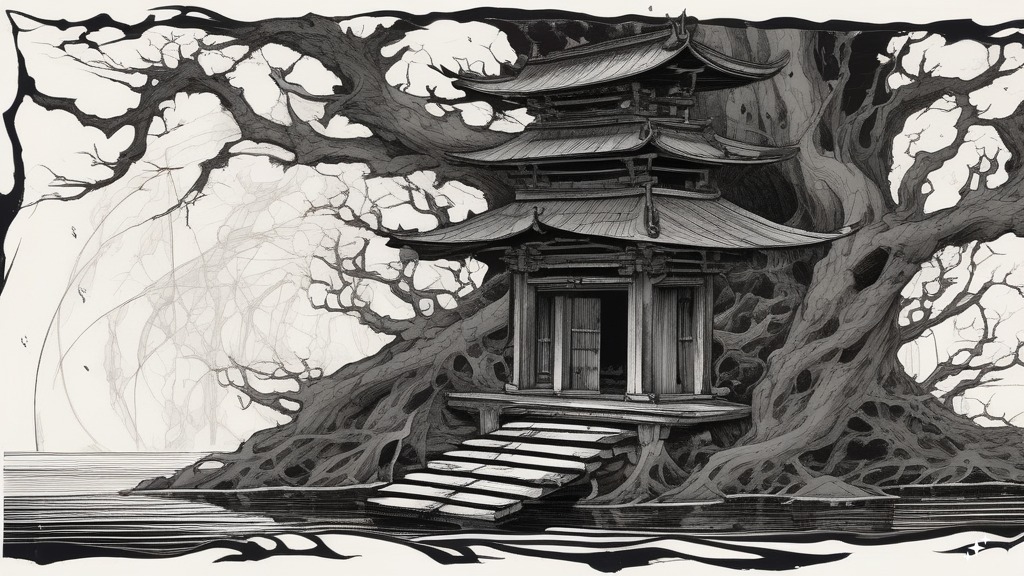
Atmosphere over shock. The best horror manga builds dread slowly. Where Western horror comics often rely on color and splash pages for impact, manga uses the contrast of black ink on white paper to create unsettling imagery that lingers. Shadows feel deeper. Empty space feels emptier. A face drawn with too much detail becomes profoundly wrong.
Pacing through panels. Manga creators control exactly when you see something terrifying by exploiting the page-turn format. You’ll read through quiet, ordinary panels — a character walking home, opening a door — and then turn the page to a full-spread image that genuinely startles you. This technique works because of how manga is structured: right-to-left reading means your eye moves differently, and good horror manga creators weaponize that movement.
Cultural roots matter. Japanese horror draws heavily from concepts like yōkai (supernatural creatures from folklore) and onryō (vengeful spirits — think of the ghost in The Ring, which originated as a Japanese novel). These aren’t just spooky figures. In Japanese tradition, spirits often linger because of unresolved grief or injustice, which gives horror manga a emotional weight that differs from the “evil for evil’s sake” approach common in Western horror. You don’t need to be a folklore scholar to enjoy these stories, but knowing that the horror often comes from a specifically Japanese understanding of the uncanny adds another layer.
The body as a site of horror. Japanese horror manga has a particular obsession with the human body going wrong — transformation, infection, loss of physical autonomy. This type of horror (often called “body horror,” which we’ll break down in the subgenre section below) isn’t just gore for shock value. In the best series, physical transformation becomes a metaphor for loss of identity, social pressure, or the fundamental strangeness of being a biological creature.
A Brief History of Horror Manga
Horror manga didn’t appear out of nowhere. A quick look at its history helps you see why certain creators keep coming up in every recommendation list.
Kazuo Umezu is widely considered the godfather of horror manga. His work The Drifting Classroom (1972–1974) set the template for survival horror in manga: ordinary people thrust into nightmarish situations, group dynamics crumbling under pressure, and imagery that was shockingly intense for its era. Hideshi Hino pushed horror manga into more visceral, transgressive territory during the same period. These early creators established horror as a legitimate manga genre.
The genre exploded internationally in the 1990s and 2000s. Junji Ito began publishing Tomie in 1987 and went on to create Uzumaki, Gyo, and dozens of short story collections that defined what horror manga could be. Ito’s genius lies in taking simple, almost absurd concepts — a town obsessed with spirals, fish with mechanical legs — and rendering them with such commitment and visual precision that they become genuinely nightmarish. Hitoshi Iwaaki’s Parasyte (1989–1994) blended sci-fi with body horror and philosophical questions about what makes us human. Kentaro Miura’s Berserk (1989–2021) wasn’t strictly horror, but its dark fantasy world contained some of the most horrifying sequences in all of manga.
The modern era has seen horror manga reach wider audiences than ever, partly thanks to anime adaptations and digital platforms. Tatsuki Fujimoto’s Chainsaw Man mixes horror with frantic action and genuine emotional depth. Shuzo Oshimi (Happiness, Blood on the Tracks) brings a slow, emotionally intense sensibility to psychological horror. Sui Ishida’s Tokyo Ghoul became one of the best-selling manga of the 2010s, proving that horror-adjacent stories could compete with mainstream action manga in popularity.
Horror Manga Subgenres Explained
“Horror manga” covers a huge range of stories. A psychological thriller about a stalker and a cosmic nightmare about incomprehensible alien entities are both “horror,” but they’ll give you very different reading experiences. Here’s a breakdown of the main subgenres to help you find what appeals to you.
Psychological Horror
What it is: Stories that focus on mental deterioration, paranoia, manipulation, and unreliable narrators. The horror comes from inside the characters’ minds — or from the realization that you can’t trust what you’re being shown.
What it feels like: Creeping unease. The sense that something is deeply wrong, even when nothing overtly scary is on the page.
Great examples:
- Tomie by Junji Ito — A beautiful, immortal girl who drives everyone around her to obsession and murder.
- Happiness by Shuzo Oshimi — A quiet teenager is bitten by a vampire, and the story becomes a meditation on isolation, desire, and the horror of transformation.
- Blood on the Tracks by Shuzo Oshimi — A boy gradually realizes his loving mother is deeply, frighteningly unwell.
Body Horror
What it is: Stories where the human body is transformed, invaded, distorted, or destroyed in ways that provoke visceral disgust and existential dread. Body horror treats physical transformation as both spectacle and metaphor.
What it feels like: Your skin crawling. An involuntary flinch. Body horror manga makes you hyperaware of your own physicality in deeply uncomfortable ways.
Great examples:
- Uzumaki by Junji Ito — The residents of a small town become obsessed with spirals, and the obsession manifests physically in ways that start strange and escalate to the genuinely nightmarish. This is the body horror manga.
- Parasyte by Hitoshi Iwaaki — Alien parasites invade human bodies and reshape them into weapons. The main character shares his body with a parasite that replaced his right hand, leading to an oddly touching partnership.
Cosmic and Existential Horror
What it is: Stories about forces beyond human comprehension — entities so vast and alien that encountering them shatters your understanding of reality. Heavily influenced by H.P. Lovecraft, but filtered through a distinctly Japanese sensibility.
What it feels like: Smallness. The terrifying realization that humanity is insignificant in a universe full of things we cannot understand or fight.
Great examples:
- Remina (also called Hellstar Remina) by Junji Ito — A planet-sized organism heads toward Earth, and humanity’s response is as terrifying as the threat itself.
- Berserk’s Eclipse storyline — While Berserk is primarily dark fantasy, this particular sequence involves an encounter with cosmic-level entities that ranks among the most harrowing in all of manga. (A “storyline” or “arc” in manga refers to a self-contained chapter within a longer series — think of it like a season of a TV show.)
Survival Horror
What it is: Characters trapped in deadly, often enclosed situations where resources are scarce, trust is fragile, and the mortality rate is high. These stories focus on group dynamics under extreme pressure.
What it feels like: Tension that doesn’t let up. You’re constantly calculating who will survive and who won’t, and the manga keeps undermining your predictions.
Great examples:
- The Drifting Classroom by Kazuo Umezu — An entire elementary school is transported to a barren wasteland. The children must survive with no adults, no food, and no understanding of what happened. Published in the 1970s and still deeply disturbing.
- Gantz by Hiroya Oku — Dead people are resurrected and forced to hunt aliens using high-tech weapons. It spans 37 volumes and never lets up on the intensity. Fair warning: this one is rated M for good reason.
- I Am a Hero — A manga artist with delusions and self-esteem issues finds himself in the middle of a zombie apocalypse across 22 volumes. It starts as a character study and becomes a full-throttle survival epic.
Supernatural and Folk Horror
What it is: Stories rooted in ghosts, curses, yōkai, and the supernatural traditions of Japanese folklore. These manga connect horror to cultural mythology and spiritual beliefs.
What it feels like: The sense that there are things just beyond the edge of perception — old, patient, and not friendly.
Great examples:
- Mieruko-chan — A high school girl suddenly gains the ability to see terrifying spirits everywhere. She copes by pretending she can’t see them. It’s equal parts scary and oddly heartwarming.
- Dandadan — A wild mashup of aliens, ghosts, and Japanese folklore with incredible art and manic energy. It’s horror-adjacent rather than pure horror, but the supernatural elements are genuinely creepy.
10 Essential Japanese Manga Horror Series for Beginners
Here are 10 series that are widely available in English, cover a range of subgenres, and work well as entry points into horror manga. They’re ordered roughly from most beginner-friendly to most intense.
1. Uzumaki by Junji Ito
| Detail | Info |
|---|---|
| Volumes | 3 (available as a 1-volume Deluxe Edition) |
| Publisher | Viz Media |
| Subgenre | Cosmic/body horror |
| Status | Complete |
If you only read one horror manga, make it this one. Uzumaki follows a small coastal town called Kurōzu-cho as its residents become increasingly obsessed with spirals. What starts as eccentric behavior — a man staring at snail shells for hours — escalates into full-blown body horror as the spiral obsession warps reality itself.
Why it’s a great starting point: It’s short enough to finish in a day or two, every chapter escalates the horror, and Ito’s artwork is so detailed and precise that you’ll find yourself staring at pages in a mix of fascination and revulsion. The Deluxe Edition collects everything in one gorgeous hardcover.
Uzumaki (3-in-1 Deluxe Edition)
Uzumaki (3-in-1 Deluxe Edition)
You’ll love this if you enjoy: surreal horror, Lovecraft, stories where the setting itself is the antagonist.
2. Tomie by Junji Ito
| Detail | Info |
|---|---|
| Volumes | Collected in 1 hardcover |
| Publisher | Viz Media |
| Subgenre | Psychological horror |
| Status | Complete |
Tomie is an impossibly beautiful girl who inspires obsessive love in everyone who meets her — love that invariably turns to murder. But Tomie can’t die. She regenerates, multiplies, and the cycle begins again.
Why it works for beginners: This was Junji Ito’s debut work, and it’s a masterclass in a single horrifying concept explored from every angle. Each chapter is relatively self-contained, so you can read it in short sessions. The horror here is more psychological than visceral — the truly scary thing isn’t what Tomie looks like, but what she does to the people around her.
3. Parasyte by Hitoshi Iwaaki
| Detail | Info |
|---|---|
| Volumes | 10 |
| Publisher | Kodansha (a major Japanese publisher that releases English translations) |
| Subgenre | Body/sci-fi horror |
| Status | Complete |
Alien parasites descend on Earth and burrow into human brains, taking over their hosts completely. Teenager Shinichi Izumi gets lucky — sort of. A parasite takes over his right hand instead of his brain, and the two are forced into an uneasy coexistence while other parasites hunt humans around them.
Why it’s a great pick: At 10 volumes, it’s a tight, complete story with no filler. The relationship between Shinichi and his parasite Migi is genuinely compelling, and the series raises real philosophical questions about what separates humans from monsters. The 2014 anime adaptation is excellent too, if you want to experience both versions.
4. The Promised Neverland by Kaiu Shirai and Posuka Demizu
| Detail | Info |
|---|---|
| Volumes | 20 |
| Publisher | Viz Media |
| Subgenre | Psychological/survival |
| Status | Complete |
| Rating | T (Teen) |
A group of orphans live an idyllic life at Grace Field House under the care of their beloved “Mama.” Then the oldest children discover the horrifying truth about why they’re really there — and what happens to kids when they’re “adopted.”
Why it’s perfect for newcomers: This is the most accessible horror manga on this list. It’s rated T, so it avoids extreme gore while still delivering genuine tension and dread. The first storyline, where the children attempt to escape the orphanage, is one of the best cat-and-mouse psychological thrillers in all of manga. The art by Posuka Demizu is stunning and expressive.
5. Chainsaw Man by Tatsuki Fujimoto
| Detail | Info |
|---|---|
| Volumes | 11+ (Part 1 complete at 11 vols, Part 2 completed March 2026 — “Parts” are separate storylines within the same series) |
| Publisher | Viz Media |
| Subgenre | Action/horror |
| Status | Ongoing |
Denji is a broke, miserable teenager who hunts devils to pay off his dead father’s debts. When he’s killed and resurrected by merging with a chainsaw devil, he becomes Chainsaw Man — a human-devil hybrid who works for a government devil-hunting agency. His goals in life? Eating good food and going on a date.
Why it hits so hard: Chainsaw Man is wild, funny, emotionally devastating, and genuinely scary in turns. Fujimoto’s horror isn’t just in the devil designs (though those are excellent) — it’s in the sudden, shocking violence that can erase characters you’ve grown attached to without warning. Part 1 has one of the most talked-about endings in recent manga history. A heads-up: despite being published in a magazine aimed at teenage boys, Chainsaw Man contains intense violence, disturbing imagery, and some sexual content that may catch newcomers off guard. Check content warnings if that matters to you.
6. Tokyo Ghoul by Sui Ishida
| Detail | Info |
|---|---|
| Volumes | 14 (+ 16 vols in the sequel series Tokyo Ghoul:re, which continues the story with new numbering) |
| Publisher | Viz Media |
| Subgenre | Psychological/action horror |
| Status | Complete |
College student Ken Kaneki survives an encounter with a ghoul — a creature that looks human but survives by eating human flesh — only to discover he’s been transformed into a half-ghoul himself. Now he exists between two worlds, belonging fully to neither.
Why it resonates: Tokyo Ghoul was one of the most popular manga of the 2010s for a reason. Kaneki’s psychological deterioration over the course of the series is genuinely painful to watch, and Ishida’s art evolves dramatically from clean and conventional to chaotic and expressionistic as the story darkens. The complete box set (Vols. 1-14) is a great way to get the first series all at once.
Tokyo Ghoul Complete Box Set (Vols. 1-14)
Tokyo Ghoul Complete Box Set (Vols. 1-14)
7. The Drifting Classroom by Kazuo Umezu
| Detail | Info |
|---|---|
| Volumes | 11 (available as a 3-volume Perfect Edition) |
| Publisher | Viz Media |
| Subgenre | Survival horror |
| Status | Complete |
An elementary school is suddenly transported to a desolate wasteland. No adults survive the transition mentally intact. The children must organize, find food, and survive threats from both the hostile environment and each other.
Why it still works decades later: Published in the 1970s, The Drifting Classroom shouldn’t be this effective — but it absolutely is. Umezu’s art is frantic and raw, the pacing is relentless, and the core horror — children forced to build a society from scratch while surrounded by death — remains deeply unsettling. The 3-volume Perfect Edition from Viz is the best way to read it in English.
8. Dorohedoro by Q Hayashida
| Detail | Info |
|---|---|
| Volumes | 23 |
| Publisher | Viz Media |
| Subgenre | Dark fantasy/body horror |
| Status | Complete |
In a grimy, violent world called the Hole, a man named Caiman has had his head transformed into a lizard shape by a sorcerer’s magic. He doesn’t remember who he is. With his friend Nikaido, he hunts sorcerers to find the one who cursed him — biting their heads to check if they’re the right one.
Why it’s special: Dorohedoro is unlike anything else. Q Hayashida’s art is detailed, grimy, and weirdly beautiful. The story mixes genuine horror and body-mutilation with slapstick comedy, cooking scenes, and found-family warmth. It’s 23 volumes long but never feels padded. The Netflix anime adaptation is also fantastic.
Dorohedoro, Vol. 1
Dorohedoro, Vol. 1
9. Gantz by Hiroya Oku
| Detail | Info |
|---|---|
| Volumes | 37 |
| Publisher | Dark Horse (an American publisher specializing in manga and comics) |
| Subgenre | Sci-fi/survival horror |
| Status | Complete |
| Rating | M (Mature) |
When people die, some of them wake up in a Tokyo apartment with a large black sphere called Gantz. It gives them weapons and suits and sends them to fight aliens. If they survive enough missions and earn enough points, they can earn their freedom — or bring someone else back to life.
Why it’s gripping (with caveats): Gantz is intense, ultraviolent, and deliberately provocative. The early volumes contain sexual content and extreme gore that will put off many readers. But underneath the shock value is a genuinely compelling survival story with real stakes, impressive sci-fi worldbuilding, and action sequences that are breathtaking in their scope. This one is definitely not for everyone — check content warnings before diving in.
10. Happiness by Shuzo Oshimi
| Detail | Info |
|---|---|
| Volumes | 10 |
| Publisher | Kodansha |
| Subgenre | Psychological/vampire horror |
| Status | Complete |
Makoto Okazaki is a quiet, bullied high school student who is attacked by a vampire one night. He survives, but he’s changing. As his thirst for blood grows, so does his isolation from the normal world.
Why it’s a hidden gem: Happiness is the quietest horror manga on this list, and that’s exactly what makes it so effective. Oshimi is a master of depicting psychological distortion through art — faces that look slightly wrong, perspectives that shift subtly, moments of beauty that feel threatening. If you prefer your horror slow, emotional, and melancholic, this is the one.
Blood on the Tracks 1
Blood on the Tracks 1
Quick Comparison Table
| Title | Volumes | Subgenre | Intensity (gore + disturbing content) | Best For |
|---|---|---|---|---|
| Uzumaki | 3 (1 Deluxe) | Cosmic/body horror | Medium-high | First horror manga ever |
| Tomie | 1 hardcover | Psychological | Medium | Short-story format fans |
| Parasyte | 10 | Body/sci-fi horror | Medium | Sci-fi fans, anime watchers |
| The Promised Neverland | 20 | Psychological/survival | Low-medium | Younger readers, thriller fans |
| Chainsaw Man | 11+ | Action/horror | Medium-high | Action fans, anime watchers |
| Tokyo Ghoul | 14 (+16 in sequel series :re) | Psychological/action | Medium-high | Anime fans wanting more depth |
| The Drifting Classroom | 11 (3 Perfect Ed.) | Survival horror | High | Classic horror fans |
| Dorohedoro | 23 | Dark fantasy/body horror | Medium-high | Fans of weird, unique worlds |
| Gantz | 37 | Sci-fi/survival | Very high | Mature readers, action fans |
| Happiness | 10 | Psychological/vampire | Low-medium | Readers who prefer slow, emotional storytelling |
Where to Buy and Read Japanese Horror Manga in English
Getting your hands on horror manga in English has never been easier. Here’s a breakdown of your options.
Physical Volumes
Most manga volumes cost between $10 and $15 each, with deluxe or oversized editions running $20–$30. Box sets that bundle an entire series together typically cost noticeably less than buying each volume individually.
Major publishers for horror manga in English:
- Viz Media — Publishes Uzumaki, Tomie, Tokyo Ghoul, Chainsaw Man, The Promised Neverland, Dorohedoro, The Drifting Classroom, and many more. The biggest English manga publisher by far.
- Kodansha — Publishes Parasyte, Happiness, Attack on Titan, and Blood on the Tracks. (These publishers license Japanese manga and release them with English translations.)
- Dark Horse — Publishes Gantz, Berserk, and several Junji Ito titles.
- Yen Press — Publishes various horror and horror-adjacent titles.
Where to buy:
- Amazon is the most convenient option for most readers and frequently has competitive pricing on manga volumes and box sets.
- Barnes & Noble carries a large manga selection both online and in-store.
- Local comic shops are worth checking — many stock popular manga, and supporting local businesses is always good.
Box Sets and Omnibus Editions
If you already know you want to commit to a series, box sets and omnibus editions (which collect multiple volumes into a single, larger book) save money per volume:
- Uzumaki Deluxe Edition — All 3 volumes in one beautiful hardcover. This is the best way to read the series.
- Tokyo Ghoul Complete Box Set — Contains Vols. 1-14 of the original series. Great value if you’re planning to read the whole thing.
- The Drifting Classroom Perfect Edition — 3 oversized hardcovers with improved print quality.
Uzumaki (3-in-1 Deluxe Edition)
Tokyo Ghoul Complete Box Set (Vols. 1-14)
Digital Reading
- Viz Manga app — Subscription-based access to a huge library of Viz titles. Great for sampling series before buying physical copies.
- Manga Plus by Shueisha — A free app from one of Japan’s biggest manga publishers. It lets you read new chapters of select series in English on the same day they release in Japan. You can check the app to see if your desired series is available.
- Kindle, Kobo, and BookWalker — Individual digital volume purchases. Convenient if you prefer reading on a tablet.
Library Access
If you’re not sure horror manga is for you and don’t want to spend money before finding out, check your local library. Many public libraries carry popular manga series in their physical collections. Digital library apps like Libby and Hoopla also offer manga — you can borrow volumes for free with a library card. It’s the lowest-risk way to try a series before buying.
A Note on Reading Direction
Here’s something that catches first-timers off guard: all official English manga preserves the original Japanese right-to-left reading direction. You start at what feels like the “back” of the book and read panels from right to left. It feels weird for about 10 pages and then becomes completely natural. Every English manga volume includes a note about this, and most have a small diagram showing you the panel order.
Tips for First-Time Horror Manga Readers
A few things that’ll make your first horror manga experience better:
Start with something short and complete. Uzumaki (3 volumes, or 1 Deluxe Edition) or Parasyte (10 volumes) are both finished stories that won’t require a massive time commitment. Getting the full experience of a complete horror story is more satisfying than starting a 37-volume epic and stalling out at volume 8.
The black-and-white art is a feature, not a limitation. If you’re used to full-color Western comics, manga’s black-and-white pages might seem like a downgrade at first. Give it time. Horror manga creators use the stark contrast between black ink and white space to create atmosphere that color can’t match. Shadows are absolute. The things lurking in darkness are truly invisible until the creator chooses to reveal them.
Don’t skip panels or speed-read. Horror manga uses visual pacing deliberately. A sequence of small, quiet panels followed by a full-page spread is designed to control the rhythm of your fear. The empty space, the silent panels, the moments where nothing seems to be happening — those are doing work. Let the pacing happen.
If one subgenre doesn’t click, try another. Someone who bounces off body horror (Uzumaki) might love psychological horror (Happiness). Someone who finds survival horror (Gantz) too intense might click perfectly with supernatural horror (Mieruko-chan). The genre is broad — don’t write off all horror manga based on one series.
Check content warnings when they matter to you. Horror manga spans a huge range of intensity. The Promised Neverland is rated T and is genuinely appropriate for teenagers. Gantz is rated M and contains extreme violence and sexual content. These are not the same reading experience. Most manga volumes have age ratings on the back cover, and a quick search will tell you what to expect from any given series.
Reading environment matters. Horror manga’s black-and-white art and slow pacing are designed for focused, uninterrupted reading. If you can, read in a quiet room without distractions. The difference between reading Uzumaki on your lunch break and reading it with your full attention in the evening is substantial.
Frequently Asked Questions About Japanese Horror Manga
What is the scariest manga ever?
This is subjective, but two titles consistently top the lists: Uzumaki by Junji Ito, for its relentless escalation and unforgettable imagery, and The Drifting Classroom by Kazuo Umezu, for its raw, primal terror and willingness to put children in genuinely horrifying situations. Both are available in English and make fantastic starting points.
For more modern picks, Blood on the Tracks by Shuzo Oshimi is frequently cited as deeply unsettling in a way that feels uncomfortably real — the horror comes from an abusive family dynamic rather than supernatural elements.
Is horror manga appropriate for teenagers?
It varies enormously. The Promised Neverland is rated T (Teen) and handles its horror through tension, mystery, and psychological stakes rather than graphic violence. It’s widely read by younger teens. Chainsaw Man has more violence and some sexual content but is still marketed to a teen-and-up audience.
On the other end of the spectrum, Gantz is rated M (Mature) and contains extreme violence, graphic sexual content, and disturbing imagery throughout. Always check the age rating on the back of the volume, and when in doubt, look up specific content warnings online.
Do I need to read manga in Japanese?
No. All of the major horror manga series have official English translations published by companies like Viz Media, Kodansha, and Dark Horse. The translations are well done and read naturally. You’ll sometimes see Japanese sound effects left in the artwork (with English translations printed nearby), but the dialogue and narration are fully in English.
What’s the difference between horror manga and seinen manga?
This comes up a lot, so here’s a simple breakdown. Seinen is a label that means the manga was published in a magazine aimed at adult men (roughly ages 18 and up). Horror is a genre — a type of story. They overlap, but they’re not the same thing.
Many horror manga are seinen (Uzumaki, Gantz, Happiness, Dorohedoro), meaning they ran in magazines targeting adults. But some horror manga are shonen (published in magazines aimed at teenage boys) — Chainsaw Man and The Promised Neverland both ran in Weekly Shonen Jump, which is Japan’s most popular manga magazine for teens.
The practical takeaway: if a horror manga is labeled “seinen,” expect it to be aimed at adults and potentially contain more graphic content. If it’s “shonen,” it’s still horror but generally within limits appropriate for a younger audience.
Where do I start if I’ve never read any manga before?
Uzumaki in the Deluxe Edition is the single best first horror manga. It’s one volume, it’s complete, the art is spectacular, and it perfectly demonstrates what the medium can do that no other format can replicate. From there, branch out based on what appeals to you: Parasyte if you want sci-fi, The Promised Neverland if you want psychological thriller, Chainsaw Man if you want action, or Happiness if you want something quiet and emotional.
Is the manga better than the anime for these series?
In most cases, yes — or at least different enough to be worth experiencing. Manga gives you control over pacing, and horror benefits enormously from being able to linger on a disturbing image or speed through a tense sequence at your own pace. That said, some anime adaptations are genuinely excellent (Parasyte, Dorohedoro, Chainsaw Man), and watching the anime first is a perfectly valid way to discover a series before reading the source material.
—
Japanese horror manga is one of the richest, most inventive corners of the horror genre. The combination of stunning black-and-white artwork, deliberate pacing, and a deep cultural tradition of supernatural storytelling produces reading experiences you simply can’t get anywhere else. Pick a series from this list that sounds interesting, grab volume 1, and see for yourself. Happy reading — and maybe keep the lights on.