Who Is Tsutomu Nihei, Manga Artist?
Tsutomu Nihei (born 1971 in Fukushima, Japan) is a manga artist best known for BLAME!, Knights of Sidonia, and Biomega . Before he ever drew manga for publication, he studied architecture — and honestly, once you know that, everything about his work clicks into place.
Biomega Vol.1
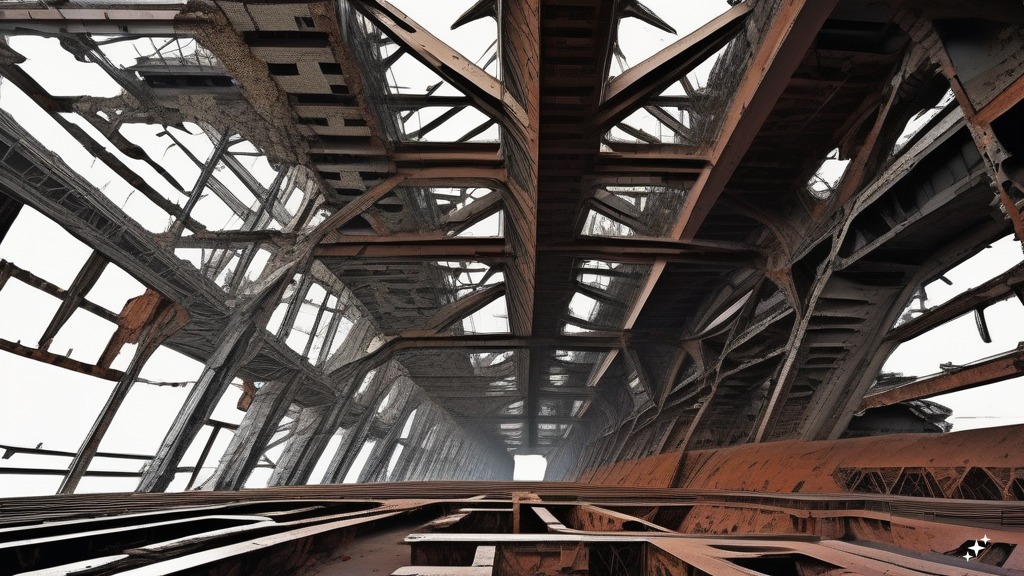
Nihei attended Parsons School of Design in New York City, a well-known art and design school, where he studied architecture. That training shows up on every single page he draws. His manga environments aren’t backdrops — they’re characters. Massive megastructures stretch for thousands of kilometers. Ceilings vanish into darkness. Corridors repeat endlessly. The spaces feel real in a way that most sci-fi manga never achieves, because the person drawing them actually understands how structures work.
He made his manga debut with BLAME! in 1997 and has been creating dark, atmospheric sci-fi ever since. His career spans over two decades and includes six major manga series, a Marvel collaboration, anime adaptations, and a Netflix film.
Every Nihei Manga — Complete Works List
Here’s every major work by Tsutomu Nihei, in roughly chronological order. All of these are available in English (with one exception noted below).
BLAME! (1997–2003)
The one that started it all — and still his most iconic work.
- Volumes: 10 (67 chapters, called “LOGs” — a naming choice that reflects the series’ cold, data-driven world)
- Originally published in: Monthly Afternoon (a Japanese manga magazine — manga series typically run chapter-by-chapter in magazines before being collected into volumes)
- English edition: 6-volume Master Edition from Vertical/Kodansha USA (oversized hardcovers — significantly larger than standard manga paperbacks, giving Nihei’s detailed art much more room to breathe)
BLAME! follows Killy, a lone figure wandering through an impossibly vast megastructure — a city that has grown out of control, expanding endlessly in every direction. Killy is searching for humans who carry the Net Terminal Gene, a specific genetic trait that would allow a human to connect to the megastructure’s governing network and potentially bring the endless, chaotic expansion under control. That’s… kind of the entire plot summary. And that’s the point.
This is a manga where pages — sometimes entire chapters — pass with zero dialogue. The architecture tells the story. You feel the isolation, the crushing scale, the sense that humanity is an afterthought in a structure that has long since forgotten its purpose.
The horror in BLAME! isn’t jump-scare horror. It’s the slow, creeping realization that nothing in this world cares whether humans exist. Silicon creatures hunt through endless corridors. The Safeguard — an automated defense system — kills humans who lack network authorization on sight, treating them as intruders in a structure their ancestors built. Bodies are twisted, rebuilt, and discarded. The megastructure itself feels hostile, alive, and completely indifferent to human suffering.
The Master Edition is the way to read this. The oversized hardcover format gives Nihei’s architectural art the space it deserves. Panels that looked cramped in the original smaller volumes become breathtaking in the larger format.
Fair warning: BLAME! is not a conventional manga. If you want clear plot progression, named characters with backstories, and dialogue-driven scenes, this will be a challenging read. But if you’re willing to let the art wash over you and piece the world together yourself, it’s an unforgettable experience.
NOiSE (2001)
A short prequel to BLAME! set in an earlier era of the megastructure.
- Volumes: 1 (8 chapters)
- English edition: Originally published by Tokyopop (a now-defunct manga publisher); currently out of print — meaning new copies are no longer being produced, so you’d need to find a used copy
NOiSE takes place before the events of BLAME!, showing a time when the megastructure’s world was closer to something recognizable. It follows a police detective investigating a series of bizarre incidents tied to the Silicon Creatures that would later dominate the BLAME! timeline.
It’s a brief read that adds some context to the BLAME! universe, but it’s not required to enjoy the main series. The bigger issue is availability — since it’s out of print, finding a copy means checking secondhand marketplaces like eBay, AbeBooks, or your local used bookstores. Prices can be steep. If you come across one at a reasonable price, grab it. Otherwise, don’t stress about it.
Abara (2005–2006)
Short, dense, and brutally violent — Nihei at his most concentrated.
- Volumes: 2 originally; available as a 1-volume Complete Deluxe Edition from Viz Media (a major English-language manga publisher)
- English publisher: Viz Media
Abara is set in a dark, industrial world where biomechanical creatures — beings that blur the line between organic flesh and machine — called White Gauna threaten humanity. The protagonist undergoes a violent transformation into a Black Gauna — a creature that can fight back but at a terrible cost.
At just one deluxe volume, this is the quickest and least expensive way to experience Nihei’s style. The biomechanical transformations are grotesque and stunning. The action is intense. And while the story is intentionally fragmented (this is Nihei, after all), it’s contained enough that you won’t feel lost.
Great pick if: You want to test whether Nihei’s style clicks with you before committing to a longer series.
Biomega (2004–2009)
Zombie apocalypse meets cosmic body horror — with a talking bear.
- Volumes: 6, published in English by Viz Media
Biomega follows Zoichi Kanoe, a synthetic human (an artificially created being with a human appearance but enhanced abilities) who rides a high-tech motorcycle equipped with an AI companion that communicates and makes tactical decisions alongside him. Together they navigate a world devastated by a zombie-like infection called the N5S virus. His mission: find and protect a girl who may be immune. Simple enough premise, right?
It doesn’t stay simple. What starts as a relatively straightforward action story escalates — wildly — into cosmic-scale body horror (horror involving disturbing transformation and violation of the human body). The virus doesn’t just turn people into zombies; it reshapes matter itself. Buildings grow organic tissue. The entire planet undergoes transformation. And through it all, Zoichi’s AI motorcycle and a talking bear named Kozlov — yes, an actual talking bear, which is unusual even by manga standards — keep things moving at a breakneck pace.
Biomega is Nihei’s most action-oriented work. It moves faster than BLAME!, has more dialogue, and features actual fight choreography that you can follow. It also has moments of genuine humor — rare for Nihei — mostly courtesy of Kozlov.
The horror here escalates from body horror to something much bigger and harder to describe. If you like stories that start grounded and then go completely off the rails (in a good way), Biomega delivers.
Knights of Sidonia (2009–2015)
Nihei’s most accessible work — and his biggest commercial success.
- Volumes: 15, published in English by Vertical/Kodansha USA
- Anime adaptation: 2 seasons + 1 movie (more on this below)
Knights of Sidonia is set aboard Sidonia, a massive seed ship (a generation ship designed to carry human civilization across space) carrying the remnants of humanity through the void after Earth’s destruction. The threat: Gauna, shapeshifting alien creatures that can absorb and mimic human forms. Humanity fights back using piloted mecha — giant humanoid robots controlled from inside by a pilot — called Garde units.
This is the Nihei series where everything clicks for a wider audience. There are named characters with actual personalities. There’s dialogue. There’s romance (of a sort — this is still Nihei). There’s a clear plot that moves from conflict to conflict with stakes you can follow.
But don’t worry — the Nihei DNA is all over this. The Gauna are genuinely unsettling, especially when they start mimicking human faces and bodies. The body horror elements are woven throughout: humans are hybridized with alien biology through experimentation, and some have been genetically modified to photosynthesize — meaning they can convert sunlight into energy like plants, reducing their need for food. It’s presented matter-of-factly, which makes it even stranger. And the sense of scale is classic Nihei: Sidonia is enormous, and the space battles make you feel how tiny humans are against the void.
Knights of Sidonia is the series that brought Nihei to a much larger audience, partly thanks to its Netflix anime adaptation. If you’re coming from anime and want to try Nihei’s manga, this is the natural bridge.
APOSIMZ (2017–2021)
APOSIMZ 1
Nihei’s most recent completed series — cleaner, clearer, and more character-driven.
- Volumes: 9, published in English by Vertical/Kodansha USA
APOSIMZ is set on the surface of a massive artificial planet. The protagonist, Etherow, gains a Frame — a mechanical body that grants superhuman abilities — and becomes caught up in a conflict between surface dwellers and an empire that controls the planet’s interior.
If Knights of Sidonia represented Nihei learning to tell more accessible stories, APOSIMZ continues that trajectory. The characters are clearer, the plot is more structured, and the dialogue does more heavy lifting than in his earlier works.
That said, this is still unmistakably Nihei. The biomechanical designs are fantastic. The world-building is dense and rewards close attention. And the action sequences have a weight and brutality that’s become his signature.
APOSIMZ sometimes gets overlooked compared to BLAME! and Knights of Sidonia, but it’s a really solid series — especially for readers who want Nihei’s aesthetic without the extreme minimalism of his early work.
Other Works
Nihei has created several shorter works and collaborations worth knowing about:
- Wolverine: Snikt! (2003) — A 5-issue Marvel miniseries (a short, self-contained comics run) where Nihei applies his dark, architectural visual style to Wolverine. Logan fights biomechanical creatures in a post-apocalyptic landscape. If you’ve read any Nihei at this point, you can probably picture exactly what this looks like — and it delivers.
- The Halo Graphic Novel (2006) — Nihei contributed a story to this anthology (a collection of stories by different artists) based on the Halo video game franchise.
- BLAME! Academy and So On — A comedic spin-off set in a school version of the BLAME! universe, played entirely for laughs. It’s bizarre, silly, and completely different from everything else on this list.
- Various one-shots (standalone single-chapter stories) published in Japanese anthologies over the years.
What Makes This Manga Artist’s Style Unique
Nihei’s visual style is instantly recognizable. Here’s what sets him apart from other manga artists:
Architecture as storytelling. This is the big one. Nihei’s backgrounds aren’t decorative — they carry narrative weight. In BLAME!, the megastructure IS the story. You understand the world through the spaces characters move through: endless corridors, impossible vertical shafts, chambers so large they have their own weather. His architecture training means these spaces feel structurally plausible even when they’re fantastical.
Scale that makes you feel small. Nihei constantly uses composition to emphasize how tiny humans are within his worlds. A common panel layout: a massive double-page spread (two facing pages treated as one wide image) of a cavernous space, with a human figure barely visible at the bottom. It creates an overwhelming sense of insignificance that’s central to his horror.
Minimal dialogue. Especially in BLAME! and Abara, pages can pass with zero text. This isn’t laziness — it’s a deliberate choice. Nihei trusts his art to communicate mood, narrative, and emotion without words. It makes reading his manga feel more like exploring a space than following a conversation. For newer readers, this also means lower dialogue levels can make a series harder to follow at first — the art is doing the work that words usually handle.
Biomechanical creature design. Nihei’s creatures blend organic and mechanical elements in ways that are deeply unsettling. Silicon Creatures in BLAME!, Gauna in Knights of Sidonia, the transformations in Abara — they all share a design philosophy where the boundary between flesh and machine is blurred, broken, or nonexistent.
Heavy blacks and oppressive atmosphere. Nihei uses black ink generously. His pages feel dark, heavy, and claustrophobic even in massive spaces. The negative space — the dark, empty areas surrounding figures and objects — isn’t truly empty. It’s threatening. You never know what’s hiding in the shadows of those enormous corridors.
Art evolution across his career. Nihei’s style has changed significantly over time:
| Era | Series | Art Style |
|---|---|---|
| Early (1997–2006) | BLAME!, NOiSE, Abara | Raw, scratchy linework. Dense crosshatching (layered lines drawn over each other to create shadow and texture). Rough, almost aggressive energy. Environments feel hand-built. |
| Middle (2004–2009) | Biomega | Transitional. Cleaner lines but still a hand-drawn feel. More dynamic action panels. |
| Later (2009–2021) | Knights of Sidonia, APOSIMZ | Clean digital lines. More polished character designs. Environments still massive but rendered with digital precision. |
Some readers prefer the raw energy of early Nihei. Others find the cleaner later work more enjoyable. There’s no wrong answer — both periods are worth exploring.
Where to Start Reading Nihei
This is the question everyone asks, and the honest answer is: it depends on what kind of reader you are.
Want the iconic Nihei experience?
Start with BLAME! Master Edition . This is his masterpiece and the work that defines his reputation. The oversized hardcover format is gorgeous. But be warned: it’s challenging. Minimal plot, almost no dialogue, and a world that doesn’t explain itself. If you’re comfortable with ambiguity and want art that hits you on a gut level, this is the one.
BLAME! 1 (Master Edition)
Want something more conventional first?
Start with Knights of Sidonia. It has a clear story, named characters you’ll care about, actual dialogue, and enough Nihei weirdness (Gauna body horror, photosynthetic humans, biological experimentation) to give you a taste of what he’s about. Plus, there’s an anime adaptation you can watch afterward. At 15 volumes it’s a bigger commitment, but the story pulls you through.
Want a quick test?
Try Abara (single Deluxe volume). You can finish it in one sitting, and at just one volume it’s the smallest financial commitment on this list. If the biomechanical transformations and fragmented storytelling grab you, you’ll love the rest of his work. If they bounce off you, you’ve saved yourself from investing in a longer series.
Want action-horror?
Go with Biomega. It’s the fastest-paced Nihei series, with a cool protagonist, a talking bear, and a zombie apocalypse that escalates into something much stranger. Six volumes, consistently entertaining.
One important note: Nihei’s works share thematic DNA — megastructures, biomechanical horror, futures where humanity has been radically transformed — but they’re mostly standalone stories. You don’t need to read them in any particular order. The one exception is NOiSE, which is a prequel to BLAME! and makes more sense after you’ve read the main series (if you can find a copy at all).
Here’s a quick comparison to help you decide:
| Series | Volumes | Dialogue Level | Horror Level | Accessibility |
|---|---|---|---|---|
| BLAME! | 6 (Master Edition) | Very low | High | Challenging |
| NOiSE | 1 | Low | Medium | Moderate (but out of print) |
| Abara | 1 (Deluxe) | Low | High | Moderate |
| Biomega | 6 | Medium | High | Accessible |
| Knights of Sidonia | 15 | High | High | Most accessible |
| APOSIMZ | 9 | Medium-High | Medium | Accessible |
Anime Adaptations of Nihei’s Work
Two of Nihei’s manga have been adapted into anime, both by Polygon Pictures:
Knights of Sidonia (Anime)
- Season 1: 2014, 12 episodes
- Season 2 (Battle for Planet Nine): 2015, 12 episodes
- Movie: Love Woven in the Stars: 2021
All three were produced by Polygon Pictures and originally streamed on Netflix. The anime covers the full manga story across both seasons and the movie.
The animation style is polarizing. Polygon Pictures uses full 3D computer-generated animation (CG) rather than traditional hand-drawn animation. This gives the space battles a distinctive look but makes character movement feel stiff to some viewers. The Gauna designs translate well to 3D, and the sense of scale in space combat is impressive.
If you’re new to Nihei, watching the Knights of Sidonia anime first is actually a solid approach. It gives you the story in an accessible format, and if you connect with the world, you can dive into the manga for Nihei’s superior artwork and additional detail.
BLAME! (Movie, 2017)
- Format: Feature-length CG film
- Studio: Polygon Pictures
- Platform: Netflix
The BLAME! movie doesn’t adapt the full manga — it couldn’t, given BLAME!’s structure. Instead, it tells a contained story within the megastructure, following a group of humans who encounter Killy. It works as an introduction to the BLAME! world, but it only scratches the surface of what the manga offers.
The film looks impressive in terms of environmental design — the megastructure is rendered with real care. But the full experience of BLAME! — the silence, the isolation, the slow accumulation of dread as you turn page after page of empty corridors — that’s something only the manga delivers.
Should You Watch or Read First?
For Knights of Sidonia: Either works. The anime is a faithful adaptation, and watching it first won’t spoil the manga experience — you’ll notice details and nuances in Nihei’s art that the anime couldn’t capture.
For BLAME!: Read the manga. The movie is a fun companion piece, but the manga IS the experience. Watching the movie first might actually give you a misleading impression of what BLAME! is — the movie has far more dialogue and conventional plot structure than the manga.
Wrapping Up
Tsutomu Nihei occupies a unique space among manga artists. His architectural background gives his worlds a physical presence that few other creators can match. His creature designs are genuinely unsettling. And his willingness to strip away dialogue and let the art speak — especially in BLAME! — creates a reading experience unlike anything else in the medium.
If you’ve been curious about his work, there’s never been a better time to start. Every series is complete. The Master Edition of BLAME! is readily available. Knights of Sidonia has an anime adaptation for easy entry. And you can test the waters with a single volume of Abara before committing to anything longer.
Abara: Complete Deluxe Edition
Grab a volume, turn off the lights, and get ready to feel very, very small.