How Many Volumes Does The Drifting Classroom Have?
Short answer: 11 original volumes, or 3 Perfect Edition hardcovers that collect the entire story. Either way, you’re reading the same 44 chapters of one of the most intense horror manga ever made. If you’re searching for The Drifting Classroom manga volumes, this guide covers everything you need to know before buying.
The Drifting Classroom (漂流教室 / Hyōryū Kyōshitsu) was written and illustrated by Kazuo Umezz. It ran in Shogakukan’s Weekly Shōnen Sunday — a popular Japanese manga anthology magazine — from 1972 to 1974. (Shogakukan is one of Japan’s largest publishing companies, and “shōnen” refers to manga aimed at a young male readership.) In 2019–2020, Viz Media, the main English-language manga publisher, released the Perfect Edition — a hardcover re-release with a new translation, restored color pages, and a new afterword from the author. For most readers picking this up today, the Perfect Edition is the way to go.
Below, you’ll find a full volume-by-volume breakdown, a comparison of the two editions, a spoiler-free reading guide, and some honest notes on what to expect from this classic.
The Drifting Classroom at a Glance
| Detail | Info |
|---|---|
| Author / Artist | Kazuo Umezz |
| Original Serialization | Weekly Shōnen Sunday (manga magazine), 1972–1974 |
| Total Chapters | 44 |
| Original English Volumes | 11 (Viz Media, 2006–2008) — out of print |
| Perfect Edition Volumes | 3 hardcovers (Viz Media, 2019–2020) — currently in print |
| Approximate Cost (Perfect Ed.) | ~$25–30 per volume (~$75–90 for all three) |
| Status | Complete — finished story, no ongoing sequels |
| Award | 20th Shogakukan Manga Award (1974) |
What’s the Story About? (Spoiler-Free)
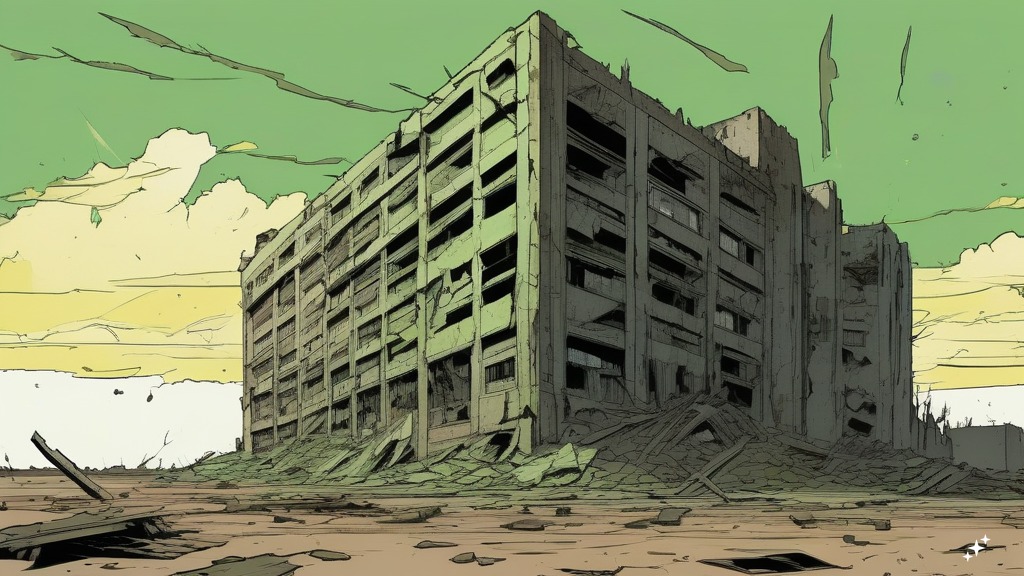
One moment, Yamato Elementary School sits in an ordinary neighborhood. The next, a violent earthquake rips the entire building — along with 862 students and staff — out of its city and drops it into a vast, lifeless wasteland. No buildings. No people. No explanation.
Sixth-grader Shō Takamatsu finds himself fighting to keep his classmates alive as food runs out, teachers crack under pressure, and the wasteland reveals threats far worse than starvation. Giant insects. Disease. And the most dangerous thing of all: other people losing their minds.
If you’ve ever read Lord of the Flies — the classic novel about schoolchildren stranded without adults — and thought “this could be scarier,” Kazuo Umezz had the same idea, and he went much, much further with it. The Drifting Classroom is relentless. It barely lets you breathe between crises. And somehow, running underneath all that horror, there’s a deeply emotional story about a mother’s connection to her child.
The Drifting Classroom Manga Volumes: Perfect Edition Breakdown
The 3-volume Perfect Edition is what you’ll find in bookstores today. Each volume runs roughly $25–30 at retail. Here’s exactly what each one contains, so you know what you’re getting into.
Perfect Edition Vol. 1 — The Catastrophe
Collects: Original Volumes 1–4 (Chapters 1–16)
Pages: 744
Released: October 15, 2019
The school vanishes. Panic sets in immediately. Teachers lose control — some faster than others. Shō emerges as a reluctant leader while the students realize no rescue is coming. This volume establishes the premise and then keeps escalating. By the time you finish, you’ll understand why people call Umezz the “God of Horror Manga.”
The Drifting Classroom: Perfect Edition, Vol. 1
Perfect Edition Vol. 2 — Survival and Betrayal
Collects: Original Volumes 5–8 (Chapters 17–32)
Pages: 760
Released: February 18, 2020
Resources are gone. Factions form. New threats crawl out of the wasteland. This middle section digs into mob mentality and what happens when desperate children form their own brutal society. Some readers feel the pacing gets repetitive here — crisis after crisis — but others find this is where the story hits its emotional peak. Shō’s connection to his mother back in the real world becomes a lifeline threading through the chaos.
The Drifting Classroom: Perfect Edition, Vol. 2
Perfect Edition Vol. 3 — The End
Collects: Original Volumes 9–11 (Chapters 33–44)
Pages: 544
Released: June 16, 2020
Everything comes to a head. The surviving students face the truth about the wasteland and what it means for their future. Fair warning: the ending is divisive. Some readers find it deeply moving. Others find it abrupt. Either way, it’s the kind of ending that sticks with you and demands a second read.
The Drifting Classroom: Perfect Edition, Vol. 3
Original 11-Volume Edition — Quick Reference
If you happen to find the original 11 Viz Media volumes at a used bookstore or secondhand online, here’s how they map out. These were published between August 2006 and December 2008 and are now out of print — meaning they’re no longer manufactured or sold new by the publisher. Completing the full set secondhand is unreliable and often expensive, so unless you already own most of them, the Perfect Edition is the more practical choice.
| Original Vol. | Perfect Ed. Equivalent | Notes |
|---|---|---|
| Vols. 1–4 | Perfect Ed. Vol. 1 | The catastrophe, initial panic, Shō takes charge |
| Vols. 5–8 | Perfect Ed. Vol. 2 | Faction wars, wasteland creatures, deepening horror |
| Vols. 9–11 | Perfect Ed. Vol. 3 | Final story section and conclusion |
The content is the same either way. The Perfect Edition has a new translation, restored color pages from the original magazine run (manga is typically printed in black and white in collected volumes, but the original magazine serialization sometimes included color pages — the Perfect Edition brings those back), a new afterword by Umezz, and a larger hardcover format. If you’re starting fresh, the Perfect Edition is the better pick — better translation, better presentation, and actually available.
Perfect Edition vs. Original: Which One to Buy?
Let’s make this simple:
| Feature | Original (11 Vols.) | Perfect Edition (3 Vols.) |
|---|---|---|
| Availability | Out of print; secondhand only | In print and widely available |
| Format | Standard paperback | Oversized hardcover |
| Translation | Older Viz translation | New translation |
| Color Pages | No | Yes — restored from original magazine run |
| Extras | None | New afterword by Kazuo Umezz |
| Price | Variable (secondhand pricing) | ~$25–30 per volume |
Unless you’re specifically collecting the original printings, the Perfect Edition wins on every count. Three volumes instead of eleven, better production, and you can actually buy them new.
Reading Order
The Drifting Classroom is a single, linear story. No spin-offs, no alternate timelines, no companion series you need to read first. Just pick up Volume 1 and go straight through to Volume 3.
Reading order for the Perfect Edition:
- Perfect Edition Vol. 1 → Vol. 2 → Vol. 3
That’s it. 44 chapters, beginning to end, one continuous narrative. No jumping around required.
One thing worth noting: there’s a tribute anthology (a collection of short stories by various manga artists) called 14 Nights in a Drifting Classroom (2020), published by Shogakukan in Japan. It is Japanese-only and has not been released in English as of this writing. It is not part of the main story and is not required reading — just a side curiosity for fans.
What to Expect: Content Warnings and Tone
This is not a subtle manga. It’s worth knowing what you’re getting into, especially if you’re new to horror manga.
Content to be aware of:
- Violence involving children — This is the core of the story. Elementary school-age children are hurt, killed, and put in genuinely horrific situations. The violence is depicted graphically — this is not implied or offscreen. Umezz does not pull back from showing the consequences.
- Body horror — Disease, mutation, and physical suffering are depicted in graphic detail.
- Psychological horror — Adults and children breaking down mentally. Mob violence. Betrayal. Paranoia.
- Intense emotional content — The mother-son subplot is genuinely heartbreaking at times.
The art style is from the early 1970s, so it looks very different from modern manga. Characters have exaggerated, wide-eyed expressions — a style typical of manga from that era. Some new readers find it dated at first. But here’s the thing: those oversized, screaming faces work for horror. The rawness of the art amplifies the panic. Give it a few chapters and you’ll stop noticing the era and start feeling the dread.
Who Is Kazuo Umezz?
Kazuo Umezz (also spelled Umezu; born September 3, 1936, died October 28, 2024) is often called the “God of Horror Manga.” He’s one of the foundational figures of the genre, and his influence runs through virtually every horror manga that came after — including the work of horror manga artist Junji Ito, who has cited Umezz as an inspiration.
Beyond The Drifting Classroom, his other well-known works include Orochi (a horror manga series) and Cat Eyed Boy (a supernatural horror series) — both available in English from Viz Media. The Drifting Classroom won the 20th Shogakukan Manga Award in the general category, and it remains his most famous work internationally.
He passed away in October 2024 at the age of 88. The Perfect Edition, released during his lifetime, includes his own afterword — which makes these volumes feel like something of a final gift to English-speaking readers.
Adaptations (and Why the Manga Is the One to Read)
The Drifting Classroom has been adapted several times:
- 1987 live-action film — Directed by Nobuhiko Ōbayashi. It takes significant liberties with the source material and is generally considered a curiosity rather than a faithful adaptation.
- 2002 TV drama — Long Love Letter: Drifting Classroom, a Japanese drama that loosely adapts the premise with an older cast.
Neither adaptation captures what makes the manga special. The raw, page-turning intensity of Umezz’s art — the screaming faces, the splashes of wasteland, the claustrophobic school hallways — doesn’t translate easily to live action. The manga is the real experience here.
There is no anime adaptation.
Is The Drifting Classroom Good? Honest Thoughts
Yes, it’s very good. It’s also very specific in what it does. Here’s a balanced look:
What makes it great:
- The pacing is wild. Once the school vanishes, the story barely gives you a moment to rest. Each chapter ends on a cliffhanger that makes you flip to the next one.
- The emotional core is stronger than you’d expect from a horror manga. Shō’s relationship with his mother — separated by the catastrophe that tore the school away — is genuinely moving.
- It tackles big themes: environmentalism, the failure of adults, children inheriting a broken world. For a manga from the early ’70s, it feels disturbingly current.
- It’s complete. No waiting for new volumes. You can read the entire story in three books.
What might not work for everyone:
- The art style is firmly 1970s. If you can only enjoy modern manga art, the adjustment period might be rough.
- Characters sometimes make decisions that seem irrational — though this is partly the point. Panic makes people stupid, and Umezz is ruthless about showing that.
- The middle section (Perfect Edition Vol. 2) can feel like a cycle of new-threat-then-resolution. Some readers love the relentless pacing; others find it repetitive.
- The ending is divisive. Without spoiling it: don’t expect a neat, conventional resolution.
If you’re interested in horror manga at all, The Drifting Classroom is a foundational work. It’s one of those manga that shaped everything that came after it in the genre. And honestly? It’s still scarier than most modern horror manga. The 1970s rawness gives it an edge that polished contemporary art sometimes lacks.
Where to Start
Grab The Drifting Classroom: Perfect Edition, Vol. 1. That’s 744 pages covering the first four original volumes. By the end of it, you’ll know whether this series is for you — and if it is, you’ve only got two more books to go.
If you’re new to manga, one quick note: manga reads right to left — you open the book from what would be the “back” cover of a Western book and read panels from right to left across each page. It feels natural within a few pages.
Three volumes. One complete story. One of horror manga’s all-time greats.